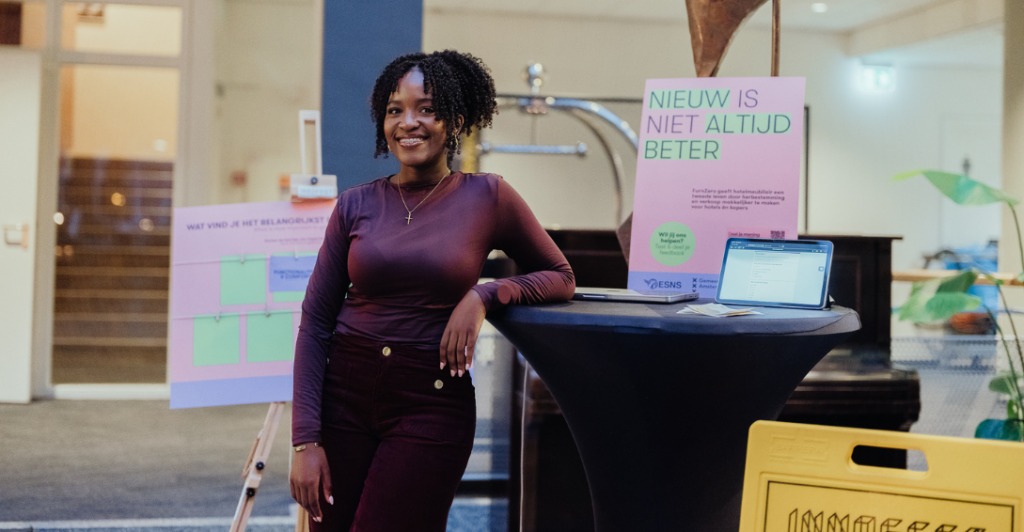
FurnZero enables hotels to reuse furniture instead of discarding it during renovations. This gives consumers access to high-quality furniture at a lower price, while helping hotels achieve their circularity goals more effectively.
During ESNS 2026, FurnZero explored who its ideal target audience is and which barriers people experience when buying second-hand furniture. The central question was: what do people actually base their decisions on, and what do they need in order to trust the purchase?
The test showed that people primarily choose furniture based on aesthetics, comfort, functionality, and value for money. Circular motivation typically plays a role only after these criteria are met. Second-hand hotel furniture is perceived as high-quality, but only if condition, hygiene, and overall quality are clearly verified. In an A/B test, 85% of participants made their initial choice based on visual and functional appeal, while 15% switched their preference due to transparency about the item’s second-life potential and sustainability benefits.
Trust proved to be a key factor. Clear photos, condition ratings, information on materials and age, and evidence of cleaning significantly increase purchase confidence. Low-risk items such as chairs, tables, desks, and lamps are the most promising, while upholstered furniture such as sofas requires additional proof of quality and hygiene. Logistics also emerged as a major barrier: without easy delivery or pickup options, many interested buyers drop out.
The test confirmed that FurnZero is most promising as a curated, low-risk platform where quality and certainty come first, and circularity acts as a supportive benefit.
FurnZero is now working on standardised trust signals (high-quality photos, hygiene indicators, reviews, wear-and-tear information, optional 360-degree imagery, and warranty options) as well as logistics solutions, starting in Amsterdam. In addition, two short social media pilots are being prepared to validate demand and conversion through a small product drop and to measure the impact of trust-building features on purchasing behaviour.
In collaboration with
Gemeente Amsterdam & ESNS